

New Year’s Eve in the Canary Islands is a unique experience that blends Spanish traditions with the tropical charm of the islands. With temperatures hovering around 20–23°C in the middle of December, welcoming the new year under the stars and by the sea has become a dream for many travellers. In Puerto de la Cruz and throughout Tenerife, this magical night takes on a very special meaning.
The 12 Grapes of Luck: A Ritual That Brings Everyone Together
As in the rest of Spain, the most deeply rooted tradition in the Canary Islands is eating the 12 grapes in time with the midnight chimes. Each grape represents one month of the year ahead, and eating them all before the final chime promises twelve months of prosperity and happiness.
What makes it special in the Canary Islands is the setting: while people in Madrid gather at Puerta del Sol, locals and visitors here meet in town squares or, even better, on the beaches. Imagine eating your grapes with your feet in the sand, listening to the sound of the waves and feeling the sea breeze, all beneath a star-filled sky.
Practical tip: Although it may seem easy, eating the grapes on time is quite a challenge. Locals recommend peeling them in advance and removing the seeds to avoid choking and to enjoy the moment without rushing.
Red Underwear: Passion, Love and Good Luck
One of the most widespread traditions in both the Canary Islands and the rest of Spain is wearing new red underwear on New Year’s Eve. This ritual, rooted in ancient civilisations such as the Chinese and Roman cultures, is believed to attract love, passion and good fortune for the year ahead.
The colour red symbolises energy, vitality and strength. During the Middle Ages, when red was associated with occultism and witchcraft, people began wearing it hidden under their clothes as a form of protection and a discreet way to attract good luck.
The “rules” of the ritual:
For the more superstitious, there is a proper way to follow this tradition:
- It must be new and gifted: The garment should be worn for the first time that night and, ideally, received as a gift from someone special.
- The inside-out ritual: Some believe it should be worn inside out on 30 December and turned the right way around on New Year’s Eve, symbolising that the new year is going “in the right direction”.
- Dispose of it afterwards: To complete the ritual, tradition says the garment should be thrown away the following day, leaving the old behind and making room for the new.
Of course, everyone decides how strictly to follow these rules. What truly matters is the intention and the desire to start the year on the right foot.
New Year’s Eve on the Beach: The Ultimate Canarian Tradition
If there is one thing that sets the Canarian New Year’s Eve celebration apart, it is the chance to experience it on the beach. This increasingly popular tradition involves bringing grapes, cava and party accessories to the seafront to welcome the new year with friends and family.
In Puerto de la Cruz, beaches such as Playa Jardín or El Bollullo become spontaneous meeting points where locals and tourists share this special moment. The atmosphere is relaxed, festive and authentic: people dressed up for the occasion but barefoot on the sand, toasting with champagne as the waves gently break on the shore.
The bravest even dare to take a midnight dip in the Atlantic Ocean to cleanse their energy and start the year feeling renewed. Although the water is cool (around 19–20°C in December), the experience is unforgettable and deeply Canarian.

Fireworks: When the Sky Lights Up
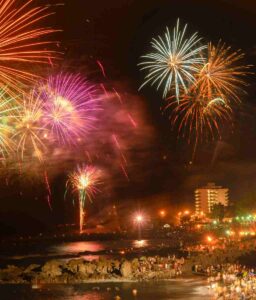
At the stroke of midnight, the Canarian sky fills with colour. Fireworks are an essential part of the celebration, and in Tenerife you’ll find pyrotechnic displays in almost every major town.
In Puerto de la Cruz, fireworks are usually launched from several strategic points, illuminating both the sea and the iconic Teide volcano in the background. The best views can be enjoyed from the seafront promenade or elevated areas of the town, where the contrast between the fireworks, city lights and the volcanic silhouette is truly spectacular.
Other popular spots to watch the fireworks in Tenerife include:
- Santa Cruz: A major display around the harbour area
- Los Cristianos and Playa de las Américas: Large-scale celebrations by the sea
- Costa Adeje: Fireworks visible from multiple beaches
Gastronomic Traditions: The New Year’s Eve Dinner
Before the chimes, Canarian families gather for a generous and special dinner. Although every household has its own customs, certain dishes are commonly found on the table:
- Seafood and fresh fish: Making the most of the surrounding Atlantic Ocean
- Roast meats: Suckling pig, lamb or turkey
- Papas arrugadas with mojo: The most iconic Canarian dish
- Turrón and polvorones: Traditional desserts, along with local sweets
The midnight toast is another key moment. Many Canarians place a small gold item (a ring or earring) inside their glass of champagne or cava before toasting, believing it will attract wealth and prosperity.

Cotillones and Street Parties: The Celebration Continues
After the grapes and fireworks, the night is far from over. In the Canary Islands, the term “cotillón” refers to large parties organised by hotels, restaurants and nightclubs, featuring gala dinners, live music and open bars.
There is also a more popular tradition: the open-air street parties in the town squares, where local bands play until dawn and people dance outdoors. In Puerto de la Cruz, stages are often set up in Plaza del Charco and other public spaces, keeping the celebration going well into the early hours.
Nightclubs and entertainment venues, especially in tourist areas, also host special themed parties. In Playa de las Américas or Costa Adeje, nightlife is particularly intense, with international DJs and parties lasting until late morning.
One Hour Less: The Canarian Time Difference
It’s worth remembering that the Canary Islands are one hour behind mainland Spain. This means that while the chimes have already rung and toasts are underway in Madrid, there are still 60 minutes to go before midnight in the islands.
This quirk has its own charm: Canarians can watch the celebrations in the rest of Spain on television and take inspiration from outfits and festivities before enjoying their own countdown. Friends and family on the mainland can also call after their midnight toast to send New Year wishes — and then call again when midnight finally arrives in the Canary Islands.


